
10 Reasons Doctor Who is the Most Inspired Science Fiction Series Ever
Don’t get me wrong; I like Star Wars and Star Trek, loved Blake’s 7, and enjoyed Battlestar Galactica. I think all those series have many brilliant themes. However, the more I reflect on it, the more I think that Doctor Who has broken more barriers and shattered more frontiers than any other science fiction series, and here are my ten reasons why. Be warned; my love for this show knows few bounds, and may lead me into the occasional profanity.
1. The Tardis
Has there ever been a better spaceship? The idea of something that is bigger on the inside than the outside – instantly alien, shockingly counter-intuitive, setting a discordant note that jarred for those first viewers of ‘An Unearthly Child’ just as sharply as it did for the two schoolteachers stumbling into the home of their strange pupil Susan and her grandfather.
A space (and time) ship which is virtually indestructible and yet offensively impotent.
Add to that the concept of a chameleon circuit – a broken chameleon circuit – by which the ship disguises itself as some culturally relevant object for the civilisation it has landed in. I mean, compare that with Klingon and Romulan cloaking devices – how dull does that make invisibility appear?
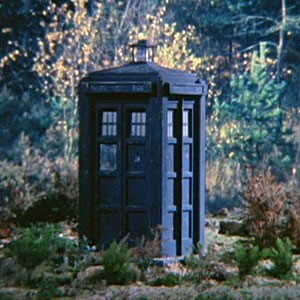
Has there ever been a better spaceship than the Tardis?
2. Time travel
H.G. Wells had regrets about his novella ‘The Time Machine’ a story he had hurried a little half-formed into the world due to the urgent need to settle some bills. It was a concept he would have liked to lavish more attention on and develop into a much longer piece. After all, his unnamed traveller followed time’s arrow only into the future – a missed opportunity.
By contrast, an old childhood favourite of mine – the adventure series Time Tunnel – sent its operatives spinning back into different eras of history. The popular 90s series Quantum Leap confined itself just to hopping around within its protagonist’s lifespan.
But only Doctor Who laid claim to the entire vista of recorded, unrecorded and yet to be recorded history, plundering myth and mayhem for new stories. Way before Clare Beauchamp went back into the past to become an Outlander in Jamie Fraser’s Jacobite rebellion, Frazier Hines played a different Jamie: a claymore-wielding highlander plucked from the disaster of Culloden into a world of more infinite possibilities than Willy Wonka’s chocolate factory. Has any other series given itself such unfettered access to the whole of human and inhuman history?
3. Space Travel
Jules Verne may have been the first master of travel fiction/science-fiction; across deserts, around the world (in 80 days) under the sea (for 20,000 leagues) or to the Moon by cannon shot. Many brilliantly entertaining ideas followed: the original Flash Gordon series with its crackling rocket ships, then Space Family Robinson and Robbie the robot, Star Trek and the warp drive, Blake’s 7 and the rebels with the acerbic talking computer, Space: 1999 and the runaway moon. But again, the nature of Doctor Who’s concept gave the story writers instant access to any context they chose. Anywhere in space, any society, any system – be it the medievalism of Peladon and its beasts, or the blasted sands of post-apocalyptic Skaro.
4. Its monsters
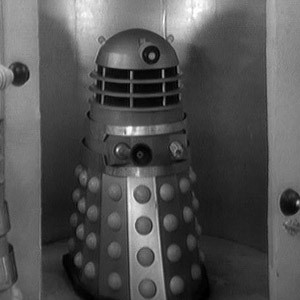 From the second story when the Daleks made their first appearance, Doctor Who has been consistently groundbreaking in imagining new monsters and creatures to scare us. (In modern society, as we become more reliant on technology for movement and communication, we may perhaps be just an eyestalk and an exterminator away from becoming Daleks ourselves).
The special effects may not always have lived up to the inspiration of the concepts (the Green Death with its giant fly on a stick chasing Jon Pertwee’s Doctor springs to mind). But oh! What concepts they were!
Only Doctor Who could – in ‘The Empty Child’ – make the mantra “Are you my mummy?” as fear-inspiring as “Exterminate.” And then what of the weeping angels, quantum-locked creatures only able to move when unobserved which feed off the potential of people’s futures by flinging them into the past? With them, as with the Autons (more on them later) Doctor Who takes something everyday and imbues it with a fearful aura. Against that you have, what? Klingons? What are they but orcs in space? Though I do have a soft spot for the parasitic collective entity that is the Borg.
5. An alien protagonist.
Other sci-fi series may have had their alien sidekicks. Star Trek had Spock, then Data, then Seven-of-nine, all exploring the nature of humanity by confining it with a creature deficient in key human traits. I have seen it argued elsewhere that Spock is essentially an elf in space. But no others have made the alien the lead character, and indeed a flawed character – not human, but not superhuman (or a least superman). From the beginning flawed, irascible, brilliant – for all that the modern series have presented him as a warrior – he has always been more of a space-wizard, more Gandalf than Conan.
As a story aimed at children yet still capable of entertaining adults (a bit like Harry Potter in that regard) there is something terribly parental about the Doctor, the character we mere humans must trust to resolve all difficulties; yet – as children soon discover – parents do not always have all the answers and at times can be the cause of the problems.
6. Regeneration ffs
I mean, what the actual fuck – what a way to create longevity not just in a character, but in a series, to allow a show to so significantly reinvent itself.
TV soaps occasionally do a switch when a character grows up or leaves and then returns – the new storyline being a chance to give another actor a shot at the character. Ben in Eastenders, Tracy Barlow in Coronation Street (OK, I’ll stop admitting I know anything about soaps). In Roseanne, two actors alternated playing the daughter Becky through the last few series for reasons I never understood. But there is no real intent to change the character when that happens.
The only other show I know that tried what Doctor Who did was the comedy My Hero, in which Ardal O’Hanlan’s genial simpleton alien superhero Thermoman was recast in the form of James Dreyfus – but since the pretext was a mere body swap rather than a regeneration it left Dreyfus and the audience a difficult task of balancing expectations ,and viewers were unforgiving.
In Doctor Who, however, the inspirational casting of Patrick Troughton to follow William Hartnell made an absolutely unequivocal break with the past. That and the variety of the show’s contexts, the shifting roll call of companions, the ever-changing worlds and peoples, made for an audience more able to cope and indeed embrace these plus ca change, plus c’est la meme chose moments.
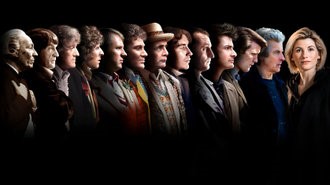
Then and now. Image courtesy of space.com
7. The Theme Tune
The original still sends shivers down my spine with its delicious alienness. Savour it here, but for a musical analysis of why I love this tune which manages to be iconic without striving to be epic, I will have to ask Jeramy Goble or @oneill_niamh.
And here is the most recent version:
8. Its age/longevity/enduring appeal/sheer versatility.
I am two days older than Doctor Who, having been born just before its first airing on terrestrial TV in the gloomy shadow of the Kennedy assassination. Apart from Coronation Street I know of no other TV show that has endured from the early 1960s.
Star Trek comes closest with its refreshing of the space opera theme with new ships and new crews to go with the ever-expanding new frontiers.
Doctor Who’s enduring strength has been its versatility, every series a blank canvas on which writers and producers can depict something entirely new or draw from an impressive cannon of past storylines and themes.
Again, that regeneration of its central character has been a consistent means of transfusing new life into the show. Thirteen* Doctors, soon to be fourteen, and everyone has their favourite – typically the one they grew up with. For me it was Jon Pertwee and then Tom Baker, but I loved what Christopher Ecclestone did in resurrecting the series and in merely acting alien rather than striving to appear alien.
*I am of course including John Hurt’s War Doctor in the list.
9. The Master
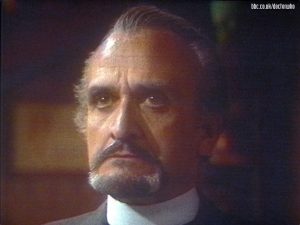 Every hero needs a nemesis, an antagonist worthy of their mettle. Roger Delgado burst on the scene and into my childhood as the first Master, saturnine and menacing. Drizzt Do’Urden has his Artemis Entreri, Sherlock Holmes has his Moriarty – evenly matched adversaries dancing a duel of fate around each other. So too is the Doctor haunted by a foe whose life and nature is intertwined with his own.
A foe, too, who shares the Doctor’s potential for re-invention in so many different forms by so many talented actors.
10. Its scariness
When the show returned at the start of this century, it carried me back three decades to sitting as a family of a Saturday night to watch, sometimes through barely-parted fingers, at other times literally from behind the sofa. As my own children – then still in primary school – dived for cover at the terrible portent of a disconnected phone ringing in defiance of known science, I was carried back to my own childhood.
The Autons appeared in an early Jon Pertwee story; beings who could manipulate plastic to make it become live and dangerous, lethal flowers, strangling telephone chords and killer dolls coming to life to attack their owners. (Dangerous killer plastic, hmm – not the first bit of prescience on Doctor Who’s part, although our current peril comes from less animated plastic than the Autons controlled).
At the time I was watching that episode I would have been perhaps seven years old, and I had a favourite hot water bottle shaped like a person which I called Walter-hottle-bottle. That evening’s show terrified me so much that I insisted the hot water bottle be locked in a suitcase on top of a wardrobe in my mother’s room and the doors between her room and mine should be locked before I felt safe enough to go to bed.
Conclusion
There are other aspects I could have mentioned that make Doctor Who so special, such as the army of good companions who have travelled with – and in some sad cases fallen by – the Doctor in his adventures. The series has been groundbreaking from its inception. Not every story has hit the button and all long-running shows risk a certain self-indulgence, or even self-parody. However, the show’s inherent versatility has facilitated its development and adaption (mutation, some might say) in tune with its changing times.
I think it the misfortune of religious faiths that – in claiming such an excess of eternal truths – they must inherently claim to be constant and immutable in a world that is so obviously not merely mutable but actively changing. It is the great asset of science fiction, of fantasy and of all forms of speculative literature, that they can shatter some barriers in fiction – and maybe help crack a few, in fact.
In so doing, the show reflects the true strength of the human species with which our favourite Time Lord is so fondly obsessed. It is human adaptability that freed us from the straitjacket of habitat that confines so many other species. Our ability to use tools, knowledge, even clothing enabled us to make a home in the most hostile environments. That versatility has (so far) saved us from extinction as we colonised the planet virtually from pole to pole. At the same time, those very attributes paradoxically make us a threat to so many other species by reshaping not just local habitats but the entire world.
Back in the 1970s, Doctor Who’s “The Green Death” story was an indictment against corporate greed, environmental abuse and the menace of technology. Looking back, it seems pretty prescient. Now, riding the crest of a wave of enlightenment about gender and women’s experiences in the modern world, we at last have in Jodie Whitaker a female Doctor. Like many, many others, I am looking forward to seeing how her casting develops this most durable, inspired and adaptable of science fiction series.

Doctor who is great but sci-fi fans got to watch the show Firefly, been great!