
Using History in Fantasy (Guest Post by Toby Frost)
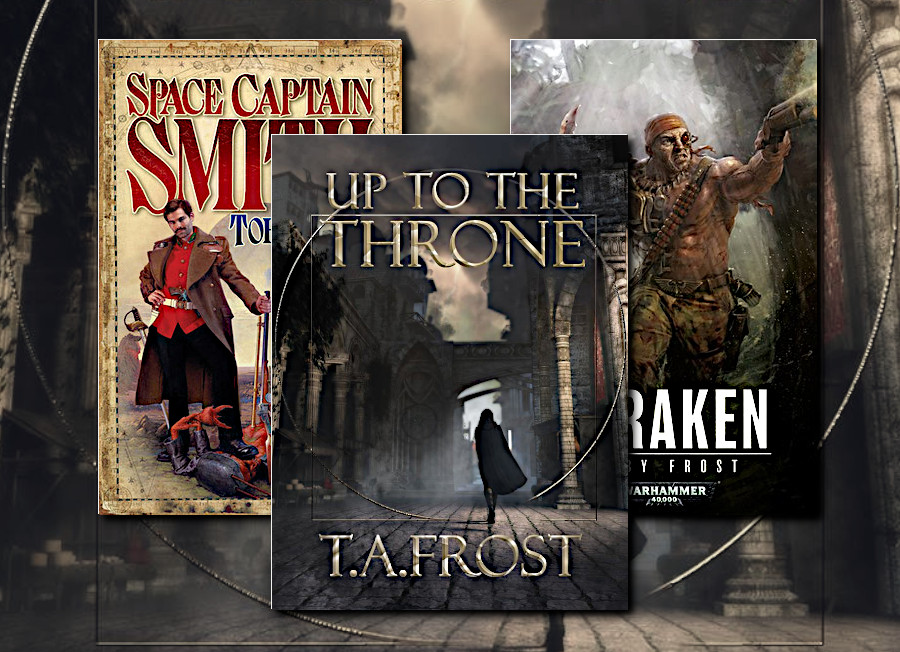
I’m not sure that truth is stranger than fiction, but it’s a lot less neat, and it often throws up unusual ideas that can inspire fantasy and SF stories. My science fiction comedies, the Space Captain Smith books, use a lot of references to British history, in particular that of the Victorians, and my recent dark fantasy Up To The Throne takes place in a city-state that’s experiencing a magically-enhanced Renaissance.
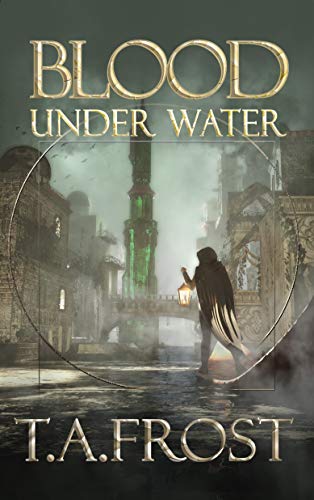
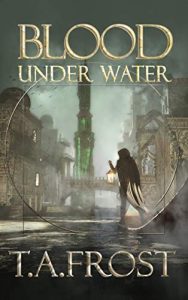 Researching history is a really good way to get away from the more cliched settings and to give a story real character. The book I’ve recently been working on, Blood Under Water, takes place in a city called Averrio, which is my setting’s equivalent of Renaissance Venice. Now, I’m not the first person by a long way to write a fantastical story inspired by Venice: writers from Daphne du Maurier to Scott Lynch have set stories in Venice itself or places influenced by it. What matters, when including history in an unreal setting, is what you do with the reality.
I’ve taken some real-world aspects out and changed others to make the setting my own. Real-world Venice was known for its glassblowing. I thought it would be fun to run with this, and so Averrio has magical glassmakers, who can capture a moment in time and depict it in their glass, rather like a short film or a GIF file. They’ve even got a castle made out of glass, as an advertisement of their skill. Venice’s emblem is the winged lion: I changed that to a griffon and, since it’s a city beside the sea, had a colony of wild griffons living out in the bay, who play a notable role in the story.
Real-world Venice greatly feared outbreaks of fire and plague. In Averrio, the authorities are frightened of the Grey Ague, a magical disease which causes people to rise up from the grave. And the Renaissance setting enabled me to include all sorts of weird ships and coastal defences, based on the wilder designs of Leonardo da Vinci. But there’s also a lot of things that I left out, or didn’t specifically mention, because they were either a bit too familiar or just didn’t sit with what I wanted to create. So you won’t find masked balls in Averrio, or striped mooring-poles. After all, it’s my city, and I get to decide what bits of the real world I use.
It’s often necessary to pick and choose what history to work with, or to deliberately give the history a certain slant. Our classic image of medieval cathedrals, for instance, is of massive, stern buildings made from dull grey stone. However, modern research suggests that some churches, in Medieval times, would have been brightly painted. Which option should the author go for – the incorrect one that “feels right” or the correct option that might not gel with the hellish grimdark setting that you’ve created? The answer, I think, is to be consistent, and to realise the results of making such changes on what you’re writing. Besides, the real truth is often more interesting than the cliché, or the easy mental image. You never know what interesting bits and pieces you might find out, and what they’ll inspire.
By “consistency”, I mean that you can’t just pick up reality, stick a couple of wizards and a dragon into it and expect it to still make sense. Changes have knock-on effects. The setting needs to reflect not just the author’s real-world research, but the fantastical elements that the author wants to include. So, you might have beautifully realistic depictions of war-galleons – but in a setting overrun with dragons, how would those rows of cannons help fend off a flying monster that breathes fire? How would the medieval church feel about wizardry? Often, the real and the imaginary can’t co-exist without adapting to fit each other. Naomi Novik’s Temeraire is a good example of this, where the availability of dragons has led to 19th century Britain developing something quite like the WW1 Royal Flying Corps – except with huge flying monsters instead of aeroplanes.
Also, it’s not necessary to reproduce the real-world aspects as they really were, or even for them to be recognisable. It’s more that you’re finding new inspiration, which can make your setting even more three-dimensional. While I think that writers have a duty to use real-life events responsibly – although we could debate forever as to what exactly that duty means – looking to reality for inspiration can make a fantasy story really distinctive.
Toby Frost is the author of the Space Captain Smith books and the Warhammer 40,000 novel STRAKEN. His latest fantasy novel, BLOOD UNDER WATER, is the second book of the Dark Renaissance series, and is available now.

I agree with this 100%. Drawing upon history can make for some excellent settings. I’m glad to see something other than just the standard European medieval setting.
I hate you, Toby Frost – I’ve been sitting on an idea for magical Venetian glass for years (while writing other stuff).
🙂
Then again, I also came up with a TV idea and then a friend of mine did almost the same thing. And then Netflix did “Bright” (not quite the same but close enough).
I also know that if I do magic Venetian glass it’s going to be different to yours so it doesn’t matter anyway.
On the subject of History, I do mostly late Victorian/Edwardian steampunk that’s historically accurate (except where it isn’t). History is the biz.