
FANTASTIC TALES by Iginio Ugo Tarchetti, translated by Lawrence Venuti (BOOK REVIEW)
“We cannot fail to recognize that in the spiritual world as in its physical counterpart, everything that happens, happens and changes through certain laws of influence whose secret we remain unable to divine entirely. We observe the effects, and we continue to be stupefied and ignorant before the causes.”
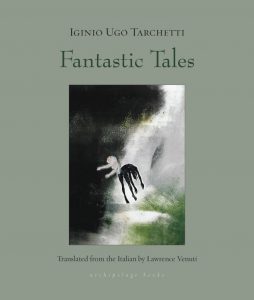 Iginio Ugo Tarchetti was an early Italian writer of gothic fiction, and his Fantastic Tales was originally published in 1869, during his involvement with the anarchist, anti-conformist scapigliatura movement, and the same year that he would die aged 29 from tuberculosis. Archipelago Books have republished the English translation of his iconic collection, translated from the Italian by Lawrence Venuti. This brings into print and circulation an important part of the history of gothic and weird fiction, one that as an English reader of these genres I was entirely unfamiliar with. Tarchetti’s delightfully mischievous and slyly subversive tales are full of the uncanny and the strange. Tarchetti plays with, subverts and sometimes downright plagiarises the gothic tradition, whilst adding his own personal twist that speaks to his Italian heritage and his anarchist political beliefs. His stories are well worth discovering for all aficionados of the genre.
Tarchetti’s most striking stories frequently engage with subversive ideas around class and gender, a key element of the scapigiatura philosophy. This can be seen memorably in ‘A Spirit In A Raspberry’, in which a young baron in a small village of Calabria eats a raspberry from a bush that grew over the corpse of a murdered housemaid, and is subsequently taken over by her ghost. Much comedy ensues from the complete destruction this working-class woman inhabiting the body of a young male baron achieves in short notice. However the story reveals its deeper intent when the housemaid is able to solve the mystery of her own murder, something so out of the context of the life of the care-free baron that he would never have guessed he had a murderer hiding in his retinue without her help. Thus it manages a rare balance of sly social humour and uncomfortable chills. Similarly, in ‘The Lake Of Three Lampreys (A Popular Tradition)’, monks living in a monastery who board themselves up and deny water to the people living in the countryside around them are turned into lampreys as punishment for their callousness. However this story, in place of the humour of ‘A Spirit In A Raspberry’, Tarchetti creates a powerful and disturbing folk horror atmosphere, with his protagonist getting lured into a secret part of the woods he is unable to escape. In a very short space, he beautifully captures the haunting and menacing aspect of the ancient Italian forests.
Other stories see Tarchetti approaching his anarchistic worldview more obliquely. ‘The Fated’ is a powerful exploration of the interactions of superstition, faith and belief that also manages to satirise the careless destructiveness of the upper classes. Baron Saternez and Count Sagrewitch are people who are cursed to cause misery, death and destruction to anyone they care about. Rather than limiting their contact with people to save them, they both selfishly go about their lives, destroying all the people who come into their orbit. Baron Saternez’s magnetic charm makes him especially dangerous, and neither he nor the Count show much in the way of remorse for the lives they ruin. Silvia, a beautiful young woman from a poor family, falls in love with him, and her family is initially delighted with the match because of the elevation of her social standing, before it becomes clear that their relationship will kill her. ‘Captain Gubart’s Fortune’ riffs on a tale from the Arabian Nights, and pokes fun at the idea of the infallibility of the king and the inferiority of the working class. ‘The Legends of the Black Castle’ is a complex narrative involving an original approach to time travel and past lives, in which inheritance becomes death. ‘Bouvard’ explores the perspective of an outsider, someone who because of his physical appearance is doomed to a life of misery and loneliness despite his incredible artistic talent. ‘A Dead Man’s Bone’ is an excellent Poe pastiche, full of atmosphere and dread, which paints professors and doctors as grave-robbers.
Other stories show Tarchetti’s interest in literary experimentation. ‘The Letter U ( A Madman’s Manuscript)’ is an exploration of a man driven to insanity by his fear and hatred of a letter of the alphabet. In its inventive use of the letters themselves on the page, it approaches ideas that would later resurface in modernist and postmodernist experimental texts half a century later. In its fear of a mundane element of reality imbued with the secret power to shatter insanity, it shares conceptual DNA with Robert W. Chambers’ iconic The King In Yellow (1895), published only a year earlier than this collection, and anticipates H. P. Lovecraft. ‘The Elixir Of Immortality (In Imitation Of The English)’ is basically Mary Shelley’s ‘The Mortal Immortal’ (1833), translated into Italian and with minor changes to just about file off the serial numbers. In the original collection Tarchetti gives no credit to Shelley, and Venuti the translator has written fascinatingly and insightfully about the extent to which Tarchetti’s act was an act of plagiarism carried out because he needed the money and to which it was a conscious part of the subversive scapigliatura agenda (you can read his thoughts on it here)
All in all, Tarchetti’s Fantastic Tales is both a fascinating historical document and an engaging collection of pioneering weird fiction. Archipelago Books have done us a service bringing it back into print, in a beautiful edition with gorgeous cover art. While Tarchetti is undeniably a product of his time, and we can call into question his ethical choices around translation and plagiarism, his stories retain a subversive and exciting power that makes them valuable additions to the canon of the weird.

[…] and Mendez mean by spoilers are very different things. But still very worth reading. The other is Jonathan Thornton’s review of Fantastic Tales by Iginio Ugo Tarchetti, a historically important piece of Italian Gothic that Thornton really […]