NOW WE ARE ANIMALS by R. P. Nathan (BOOK REVIEW)
Now We Are Animals – R P Nathan – available now
*Warning – Some Spoilers*
Thank you to @NetGalley, BooksGoSocial and Cassiopeia Contemporary for this review copy
Lucy Nield PhD Candidate, University of Liverpool.
Twitter: @lucy_nield1 Instagram: @lucy_dogs_books
‘The Mantra is:
Colonists are intelligent,
Colonists are creative,
I am not a Colonist.
Animals are not intelligent,
Animals are not creative,
I am just an animal.’
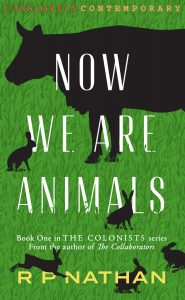 R. P. Nathan is known for writing a variety of genres, from historical mystery thriller to light romantic comedy, Nathan dips his pen into these different realms with evident success. His latest novel, Now We Are Animals, is a dystopian Young Adult Fiction novel, exploring concepts of humanism and constructed social hierarchies whilst confronting human treatment of animals and each other, in a disturbing, but unique and creative way. Nathan’s writing is comfortable and familiar, to help the reader connect with the narrative voice and get into the mindset of the protagonist, Carabel Caffarelli. Cara’s Narration, with the use of a journal (or diary), is simple but effective for this type of novel. Promptly you find yourself submerged in Cara’s day to day life, seeing what she sees and feeling how she feels about ‘Them.’
‘But that was me safely in the apartment with my new family. With my new owners.’
Cara is a seventeen-year-old Italian girl who lives in London. The story begins with her writing in her journal. At first this feels like an ordinary and perhaps stereotypical trope of Young Adult Fiction, until your expectations are promptly disrupted. Suddenly, it dawns on you that Cara is captive to someone who is described in human terms… but quickly it becomes apparent that They might not be.
Nathan uses the guise of an Alien invasion, occupation, and inevitable colonisation of Earth (including killing or capturing all of the inhabitants) to bring to light issues in human treatment of the natural world, in a delicately nuanced and refined manner. He displaces humans at the top of the hierarchy of the animal kingdom, to highlight humanity’s treatment of nonhuman-animals and the consequences of our actions. Successfully, the novel forces us into a recognition with nonhuman-animals, that we might not have fully appreciated or noticed before. The Aliens treat humans in the same way that humans treat cattle; herding female humans into barns filled with straw. Killing most of the male humans, only keeping a handful available for mating and for fighting or racing.
‘We’re all animals now.’
Whilst these practises of ‘farming’ humans, and treating them as ‘owned,’ might feel problematic and uncomfortable, the Aliens point out why they treat humans in this way. They acknowledge that humans have treated nonhuman-animals in this manner for centuries, so humans must be happy to be treated in this way as well (surely, we treat animals as we would like to be treated ourselves… right?).
‘-We have freed you and your planet from your own domination’
Cara describes her day-to-day life as a ‘pet’ in her ‘cage,’ acknowledging similarities of her situation with those of the animals, making uncomfortable and incredibly obvious nods at how we have not only treated animals badly, but also each other.
‘We’d use the way we treated animals as a playbook for cruelty to human beings: cattle trucks to concentration camps, branding slaves, using women as baby-machines.’
Now We are Animals, echoes of Orwell, and the ‘thought police’ from 1984. Humans are controlled, belittled, and constantly told they are less. They are gaslighted and manipulated, told over and over again that humans have never had any imagination or creativity. If humans DARE to argue that they do have creativity; in the form of novels and plays and a long, broad history of storytelling, then they are beaten and punished for ‘lying.’ These are dramatically similar reactions to the manipulation of Big Brother and The Party in Orwell’s famous dystopian text, which echoes loudly throughout many contemporary texts.
Nathan’s novel is certainly Young Adult Fiction, making it an easy read. It is also accessible and inclusive, which makes the narrative all the more enjoyable. The Aliens force humans to acknowledge that they are ‘animals’ on Earth just like the rest of the nonhuman animals that inhabit earth. This novel encourages the reader to consider the lives of nonhuman-animals and our treatment of them. Encouraging empathy, sympathy, and heart wrenching grief.
‘They’re just animals, Aggie.’
-So, are you.