
THE DOLORIAD by Missouri Williams (BOOK REVIEW)
“…and looking into her bruised face the schoolmaster thought to himself that the history of the world was the history of cruelty, that it had never been anything else: they limped along the great curve of extinction, one foot in the void, dwindling each year, and it was cruelty that made them cling on, pain and the paining of others that kept them moving – yes, there had to be other settlements too, scattered along the empty swathes of land, the depopulated surface of the globe, because they could never give it up, life, cruelty, and so on and so on – and the schoolmaster thought he understood, briefly, everything.”
Missouri Williams’ debut novel The Doloriad (2022) is a startlingly original and deeply uncomfortable novel. It is a post-apocalyptic novel that draws on some of the most radical examples of the genre – I think I can see traces of Walter M. Miller, Jr’s A Canticle For Leibowitz (1959), Thomas M. Disch’s The Genocides (1965), Anna Kavan’s Ice (1967) and Russell Hoban’s Riddley Walker (1980) – but in its own way, The Doloriad is bleaker and more disturbing than any of these. The novel is an exploration of human brutality, a story that looks at the destruction of humanity and asks if we deserve anything better. It is also a philosophical meditation on the beliefs that drive us to survive beyond the realm of logic or reason, and a weighing up of how our understanding of the world always falls short. It is a compelling and disturbing exploration of a humanity alienated from itself, made all the more effective through Williams’ incredible use of language. It is shot through with a unique dark humour. The Doloriad made me go, what the fuck did I just read? regularly. I’m not sure 2022 will see another book as challenging, discomforting and ultimately rewarding.
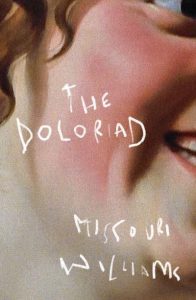 The Doloriad is set after an unspecified environmental disaster has wiped out most of humanity. The novel is a family saga of sorts, telling the story of this one surviving family living in the ruins of the Czech Republic, on the outskirts of a ruined city surrounded by forest. The family is led by the Matriarch, who has decided to rebuild humanity in her own image through incestuous sex with her brother. The family eke out a tenuous survival by raiding the surrounding land for supplies and attempting to grow crops from the poisoned soil. Eldest sibling Jan is the main organising force, carrying out the Matriarch’s will and trying to coral the rest of the children, who are increasingly affected by congenital birth conditions arising from incest. Jakub explores the ruins of the city and dreams of the old world he will never know. Dolores, legless and assumed to be stupid, endures the bullying of her siblings, and Agathe, troubled by epileptic fits, sees and understands more than her siblings realise. All must endure the pointless lessons of the schoolmaster, the only other survivor in the city. One day, the Matriarch has a vision of another group of survivors and sends out Dolores as a marriage offering. Dolores’ unexpected return instigates the collapse of the Matriarch’s fragile order, as her vision of restoring the old world succumbs to the harsh drives of her strange children.
Much of what makes The Doloriad so striking is Williams’ use of language. The book is told in an almost stream-of-consciousness flow that jumps between character perspectives to create both a vivid sense of experiencing the novel’s post-apocalyptic milieu on a visceral level and a sense of disorientation similar to that produced by Hoban’s famous future dialect in Riddley Walker. There is no exposition, the reader is just shunted between characters who have deeply flawed and incomplete understandings of the world around them. Williams’ heightened descriptions of the radically altered post-human landscape are haunting and disturbing. The characters themselves frequently have difficulty telling reality from hallucination, and this spills over into the reader, who is confronted by jarring changes of perspective and surreal, dream-like sequences. From the schoolmaster who has forgotten his old identity and fervently believes he will be reborn as a moth, to the Matriarch’s tragic delusions of grandeur, to Dolores’ neuroatypical experience of the world, these are all characters whose perceptions of reality barely overlap.
The Doloriad is a book that revels in grotesquery. Many of the descriptions of the children accentuate their abjection and their monstrousness. The novel positions them as Other in order to critique this perspective. The novel in some ways put me in mind of Tod Browning’s Freaks (1932), a film that ultimately aims to humanise its cast of real-life circus performers at the same time as exploiting their status as “monstrous”. Williams’ work reveals the hypocrisy of viewing its disabled characters as in any way less “human” than anyone else by laughing at the very idea that humanity is in any way deserving of a privileged position. From the beginning, she gives both Dolores and Agathe, the most Othered characters, their own distinct viewpoint and inner lives. As the novel continues, it becomes clear that Dolores and Agathe’s more radical view of their family and the world around them is far more suited to survival than Jan’s subservience to the Matriarch’s will or Jakub’s obsession with a dead world.
Williams’ novel builds on the legacy of previous SF apocalypses. There is much in the book that echoes the explorations of humanity succumbing to entropy in the work of J. G. Ballard or Michael Moorcock. The novel also draws on the same Old Testament sense of humanity struggling against the guilt of its past to be reborn that makes Miller’s A Canticle For Leibowitz so compelling. Echoing the eternal figure of Leibowitz, The Doloriad features an immortal Aquinas who is forced to walk the earth for eternity, but instead of watching over humanity like Leibowitz, Aquinas has gone to seed and now hosts a bizarre tv show called Get Aquinas In Here! with his sheep, in which he serves as an agony aunt type figure to people’s modern problems. However, the new world of the Matriarch’s children will not be beholden to Aquinas’ philosophy any more than it will follow the Matriarch’s desire for the old world reborn in her image. The Matriarch’s descendants, whether or not they will survive, will do so in a world radically different from the one destroyed by humanity, and so must be a radically different humanity.
