THE SWORD GARDEN by Peadar Ó Guilín (BOOK REVIEW)
Never trust the dead.
The Empire’s richest city is about to revolt and only Jarrod’s dying father can save the day. The rebels have allied with ghosts. Hostile Northerners press at the borders, along with hideous beings of unnatural origin.
Jarrod doesn’t want to fight. He was supposed to be a monk, reading precious books, singing hymns to the wise and gentle gods of his people. But he’s about to discover something utterly horrific at the heart of the rebellion.
Prepare for the worst. Prepare for the fall of an entire world.
The Sword Garden is available now, you can order your copy on Bookshop.org
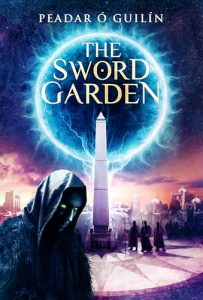 When a book gets an endorsement like this
“The twists don’t let up, with each revelation weirder than the last. A magnificent and original delve into where the human meets the alien”
from no less a speculative-fiction eminence as Adrian Tchaikovsky, then as a reader you know you are in for a treat.
However, as the blurb suggests, the narrative is a twisting ride of switchback discoveries that repeatedly shake the reader’s understanding of the story they are being told – and that presents a problem for the reviewer. How to convey the inventive magic of Ó Guilín’s imagination without spoiling the book? I haven’t felt this conflicted since I read The Girl With All the Gifts and the twist there was an earlier singular epiphany, not quite like the firework barrage of discoveries in The Sword Garden. Even to mention the movies and books with which it resonated for me would be to tell the reader too much!
Having met the author at the inaugural Norncon, I explained my dilemma to him and he thought I should just throw in the spoilers, but I will at least divide this post into pre and post spoiler sections.
Characters
The book opens in a moment of familiar conflict. A city at the edge of an empire, while at once the origin of much wealth and technological advancement, is suspected of harbouring rebellious intentions. A grizzled but ailing warrior is despatched as Governor to bring order and the Emperor’s authority to bear. His son, our protagonist Jarrod, has been dragged from the monastic seclusion he had been enjoying to act as his father’s deputy and hopefully salvage the family’s fortunes. There is a nice slow reveal of the backstory about how father and son have come to this pass. The tension between the mighty but terminally ill warrior father and his book loving son means we open with conflict, and added to that we have the father’s soldiers disdain for his literary offspring whom they still call Rabbit, despite his sudden elevation in rank.
Jarrod makes an engaging fish-out-of water protagonist, but with physical skills, mental agility and moral resilience that will all prove essential before the story’s end. The Toradian scientist Flynn-id Herzort makes an interesting fanatic in the cause of science and what potential future knowledge might be uncovered through the agency of the spires and the benevolence of the spirits.
We meet a girl, Mara, in the prologue which at first feels so disconnected from the opening chapter with Jarrod and his father at the governor’s palace that it might belong to a different book. However, Mara becomes a resourceful second protagonist as the book’s sinuous twists begin to uncoil themselves.
However, my favourite is the sardonic soon to be demoted Garrison Commander Sheerel Ul-Harak with her ‘problem’ with the local narcotic called vapour. When offered the choice between a dignified suicide or demotion and disgrace she chooses the second and survives to play a key part in unfolding events.
“But,” she said, “you would lend me that beautiful knife on the table… And, if by chance, in the morning, I were found on a carpet of my own entrails, why there’d be no need to demote me to the ranks?”
World building
The action is set in the city of Eem-Torad – known as The Sword Garden because of the blades its advanced local technology produces, much like when the black swords of iron age warriors easily blunted the softer weapons of their bronze age foes. The most distinctive feature of Eem-Torad is not its advanced technology, but the shimmering insubstantial shapes that walk alongside the local people and through the walls of the dwellings like ghosts. Their appearance is somehow connected to the ancient spire deep within the city, around which the city’s whole sense of identity and potential focus for rebellion is centred.
The idea reminded me of the 2006 Dr Who Episode “Army of Ghosts” in which the Doctor and Rose return to London to find it is experiencing regular ‘ghost hours’ where blurry human shaped apparitions appear and move around in houses, on streets and through playgrounds. The local population, including Rose’s mum, welcome these white shaped strangers as the ghosts of lost loved ones, but the truth is a little more complex and less benign than that.
In the same way the distinctive denizens of Eem-Torad are welcomed by the local people who interact with them quite fearlessly because, unlike the nebulous Dr Who Ghost Army, these spirits are distinctly and recignisably human.
Other aspects of the world Ó Guilín has built include fearsome northern tribesmen from beyond the city walls and a jungle filled with bizarre monsters that drive the maintenance of stout city walls and well managed gates. However, the city of Eem-Torad was not built, so much as excavated like the ruins of Pompeii dug out of volcanic ash, except that Eem-Torad is preserved in its entirety beneath the earth through which the tip of the spire was first spotted protruding. “Even today, parts of it remained to be excavated and every wedding party began with a week’s digging so that the joyful couple could have a home of their own.”
Prose
Ó Guilín’s prose is full of nice lines and evocative imagery, for example in this description of Jarrod’s ailing father.
The cough. It doubled him over, and the wet sound of it, like the shredding a thousand precious books, seemed to shake the warm parapet under Jarrod’s palms.
Or this description of a thriving marketplace.
The colours; the stench of spices; the cries of professional story-tellers; the obscenities squawked by colourful birds who voiced them with such conviction, it was as though they knew what they were saying.
Or this capturing of the heat of a tropical midday
Only the flies had enough energy to fight through the soup-thick air of the courtyard. A pair of bright green birds leaned exhausted against each other under the eaves of the stable roof. An old dog panted by the inner wall, and even the ghosts were little more than shimmers against the brick.
It all makes the reader of the story a pleasure even without the many other strengths of plot, character and worldbuilding.
Plot
I did worry at one point how, in the accelerating tide of events, Ó Guilín was going to be able to tie the story up neatly in just one volume. My anxiety is a measure of the pace the book rattled along at towards it’s denouement; the fact that he did in fact wrap it up neatly is a testament to Ó Guilín’s skill as a story teller. Though, tantalisingly he did leave a couple of hanging threads that would provide an excuse to revisit the world and the characters.
(Here Be Spoilers!)
I said “HERE BE SPOILERS!”
OK, on your own head be it!
As Tchaikovsky has said, the great strength of the book is in its twisting constantly surprising plot. And that is high praise indeed because, prose, character and worldbuilding are pretty damn fine too.
The fundamental twist is in the truth about who the ghosts are, where they are, and where they’ve come from. Rather than tell you what happens, I will simply mention the many resonances that the story fired off for me, and you can deduce what that Truth might be.
There is, in Flynn-id Herzort’s zeal to uncover lost science, something of The Forbidden Planet (1956) with its impossibly advanced science that the Prospero analogue, Dr Edward Morbius is trying to mine.
There is, in Mara’s reference to Earth, a reveal that this is not simply about some secondary world, but one much more intimately connected to our own time and a future where much that was known has been lost. Mark Lawrence’s Prince of Thorns has a similar reveal in Jorg’s mentioning of ‘the pope’ and his reading of Aristotle and Plato. A sense not so much of “Toto, I don’t think we’re in Kansas anymore” and more of “Toto, what the feck’s happened to Kansas?”
The idea of recovering fragmentary technology from lost but super advanced ancients is a theme for the humans of Adrian Tchaikovsky’s Children series, and underpinning this is a loss that occurred through some global disaster. In Prince of Thorns it was the day of a thousand suns, in The Sword Garden it was simply ‘the catastrophe’.
The idea that humanity is or was seeded from space has some echoes of Scientology (!) and the notion of Xenu the alien ruler and the Thetans attaching to humans (apparently 70 million years ago before humans actually existed!). There are also echoes of Stephanie Meyer’s The Host and John Wyndham’s Chocky – not least in how the pairing of a human and a host can enable a body to access superhuman powers.
However, in the grim darkness of the process of ‘bonding’ that is revealed in The Sword Garden the connection is more malign than benign – in a way that reminded me of the last Jon Pertwee Dr Who story Planet of the Spiders or even Alien (1979).
However, what delighted me most about this book (because it’s a me thing) is that The Sword Garden is a climate change book! And it reminded me of the epilogue to that painfully accurate comedy Don’t Look Up (2021) where a spaceship load of aging white billionaires and politicians buy their escape from the climate catastrophe they have caused, only to find they have landed on a desperately hostile alien environment. As one character comments
“But not one scientist among them. Not one doctor—it was all machines did the medical work by then. So none of them are worth a damn to us.”