
Interview with Craig DiLouie (ONE OF US)
Craig DiLouie is an American-Canadian writer of speculative fiction. His works have been nominated for major literary awards, translated into multiple languages, and optioned for screen adaptation. He is a member of the Imaginative Fiction Writers Association, International Thriller Writers, and Horror Writers Association.

Hello Craig, and welcome to The Fantasy Hive. Thank you so much for agreeing to take part in this Q&A!
Thanks for having me on your blog!
To start us off, in your own words, could you briefly tell us what happens in One of Us?
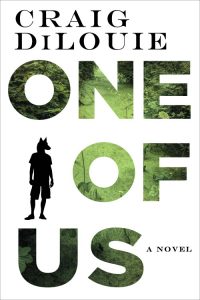
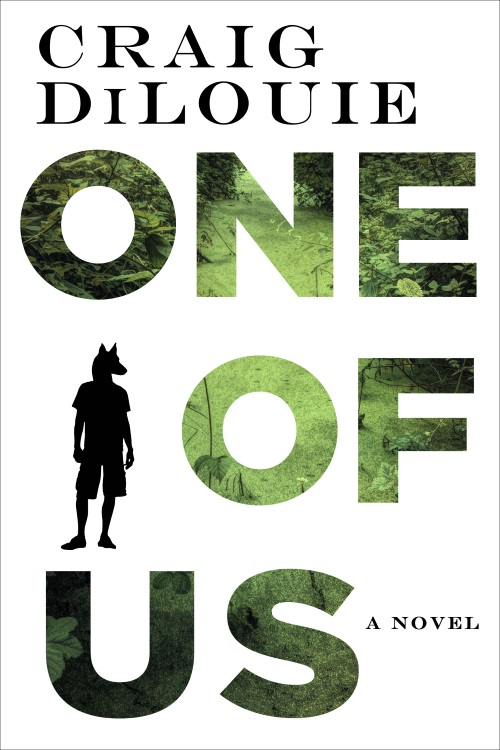
Published by Orbit, One of Us is an adult dark fantasy novel about a disease that produced a generation of monsters now coming of age in horrible orphanages throughout the American South.
As the plague children age, they discover two things. One, they have no real future, and two, they’re developing extraordinary powers. They must find a way to fit in—or fight for what’s theirs.
The result is fresh, dark, gritty take on the misunderstood monster, as well as prejudice.
Claire North has, aptly, described One of Us as “The Girl with all the Gifts meets To Kill a Mockingbird”. There is also clearly a Southern Gothic feel that runs throughout the book. What other literary influences did you have? What planted the idea for One of Us in your mind?
The concepts of “misunderstood monster” and “outcast with special powers” are familiar ideas in fantasy. What I wanted to do was to incorporate these ideas into a fresh telling by combining it with the venerable Southern Gothic literary tradition.
Southern Gothic is typically dark, gritty, violent, and deals with topics like the taboo, grotesque, prejudice, and a society in decay. In my view, this was the perfect place to tell a misunderstood monster novel. It’s so earthy that the monsters really stand out as all the more fantastic, while also blending perfectly into this lived-in world. I think it’s just plain fun for readers.
Other influences included The Island of Dr. Moreau, with its examination of what makes a beast a beast, and The Conquest of the Planet of the Apes, with its cathartic uprising against slavery that eventually faces the question of whether extreme violence is ever justified in response to violence by institutions. And of course Frankenstein, with its sympathetic monster facing a mob whose hatred is motivated by fear.
One of Us deals with monsters; you’ve described it as “a novel of monstrous humans and human monsters”, or what I envisaged as “visible monsters” and “invisible monsters”. How important do you feel it is to shine a light on society’s “monstrous humans”?
Yes, in One of Us, we have this wonderful contrast between very human monsters and very monstrous humans, who are largely Southern Gothic tropes. I did this because I thought a very powerful theme in this novel was what makes a monster a monster. I like how you put it—visible and invisible monsters.
As humans, prejudice is hardwired into us, and it’s based on fear. If you’ve ever felt like an outcast, you’ll very likely empathize with the monsters in the novel. On the other side, only one or two of the “normal” humans are outright evil. The rest are just human, making the usual human mistakes, making them relatable as well.
What’s strange is the characters in the book, similar to how people behave in real life, focus on appearances and make up stories to justify their fears. They treat others as a group based on appearances, while treating them as individuals based on behavior, even though behavior is real and appearances really mean nothing. The trick is if you call and treat a group as monsters long enough, some of them may oblige your worst fears and become very, very monstrous right back to you.
My goal as the author wasn’t to preach. The themes are pretty obvious, but this is a story, not a term paper. I’m not interested in engaging the reader’s brain about theme. Instead, I want the reader to viscerally experience it through empathy with the characters in a dramatic story. I wanted to engage the reader’s gut. After the reader closes the covers, maybe they’ll reflect, but that’s up to them.
 You’re quite a prolific writer across various genres, with your books falling under “apocalyptic”, “horror”, “historical thriller”, and “SFF.” One of Us could easily be applied to three of those genres. Do you find the idea of “genre” a limiting one, or a useful one?
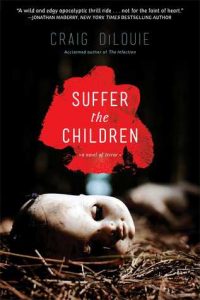
My earlier fiction tended to fit very neatly into a single genre. My novel Suffer the Children, for example, is pure horror. It’s about a parasite that kills the world’s children. They reanimate, becoming the children they once were, when given human blood. They’re vampires, but it’s the parents who are the monsters in the story, as they compete for the blood supply—a supply that must be taken from living people. It’s the end of the world, one pint at a time, because of the purest love in the world. The novel asks, how far would you go? So yeah, it’s pure horror.
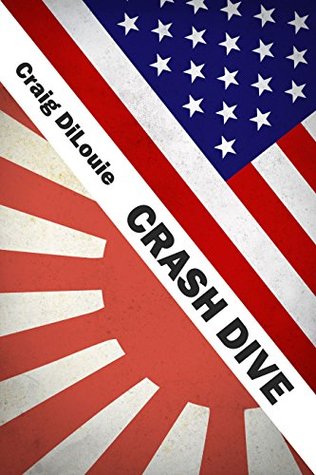
As I grow as a writer, I still write specifically for genre, such as my self-published Crash Dive series, which describes the career of a submariner fighting the Japanese Empire in World War 2. That was a lot of fun. However, for my big books like One of Us, I’m now writing to as large an audience as possible. So for One of Us, I didn’t set out to write a dark fantasy or horror or science-fiction or apocalyptic novel, I set out to write a mainstream novel with these elements.
There is a whole host of characters in One of Us; highly realistic characters (despite the genetic mutations), very true to human nature, therefore really relatable. What is your process in creating such characters?
Yes, One of Us followed the Southern Gothic convention of having an ensemble cast, which provides a cross-section look at life in this Southern town and the nearby Home for the mutagenic. As for the plague kids, they’re monsters, but they’re also just kids, making them very relatable and empathetic. For the kids, my process was simply to give them a basic appearance, a basic power, and then let them be themselves. Goofy, smart, anxious, hopeful, whatever and whoever they happen to be.
 On the other side, I made the “normals” mostly Southern Gothic tropes, but with a fresh telling, making them familiar but also something new, especially as they interact with the monsters. The process here was to make them well-rounded enough that we recognize monstrous behavior but don’t consider them really monsters either. In their own way, they’re all trying to do the right thing, at least in their own mind. There are only one or two true monsters in the book, such as Bowie and the hapless, lonely, and downtrodden Gaines, who always seems to make the wrong decision.
As for teenagers in general in the book, I not only wanted to show contrast between “normal” and “monster,” but also between generations. Kids who grow up together tend to have less prejudice to each other. In One of Us, the kids who live in the town were raised to see the plague kids as this constant mysterious threat. Some of them will follow in their parents’ footsteps, while others will resist what’s normal and fight for change. Otherwise, with the kids in the book, they are reaching an age where they are looking to the future and starting to see themselves shaping it, while prone to feeling monstrous or alienated.
Three characters that really stood out for me were Dog, Goof, and Brain. I felt they each represented a different stance on revolution and civil uprisings: hope; diplomacy; violence. Was this intentional when you set out to write One of Us?
To an extent, yes. I create characters from a particular set of needs and wants, and let them do their thing. I initially imagined Brain as going all the way with violence, for example, but in the end, he told me he didn’t really want it, but it was necessary, making him a tragic figure. Each of the characters found their own way to the end, and spoke loud and clear about where they stood, as events force everyone to make a choice for us, them, or neither.
As for the three responses—hope, diplomacy, and violence—you nailed it. On the one side, you have people whose position basically boils down to: “Keep them away from me.” This results in little individual violence but plenty of institutionalized violence—that is to say, oppression. How should a group deal with that? What are the options? What is the best way to accomplish change? When the plague children resort to violence, did they ever really have a choice? It’s not important what I think the answer is. I hope the reader will ask themselves. To me as the author, that is everything.
“I don’t want things to be bad for them,” Amy said. “I really don’t. I just don’t want them around me. Why does that make me a bad person?”
Although One of Us is set in the eighties, I felt it resonated deeply with our current climate, and not just the American one. What made you decide to set in the past?
Setting the novel in the 1980s accomplished several things for me. First, it automatically set up that this is an alternate time, a world just like ours but where one big thing happened differently. Second, I didn’t want it high-tech with people using cell phones and so on. Third, I loved the idea of the plague being a sexually transmitted disease that spread in the free love era of the late ‘60s and early ‘70s, and resulted in a prudish, religiously volatile 1980s, with plenty of shame about it. (Yes, the plague kids are monsters, but they came from us, they’re family.) And lastly, it allowed a feeling of nostalgia—not in the Stranger Things sense, but in a general nostalgia for youth.
Hope plays an important role in your story. Other than dehydration, what would you hope is the one thing readers will take away from One of Us?
[laughs] Well, you nailed it. I want the reader to feel something as they experience a powerful story in an immersive world through empathy with sympathetic characters. The best thing about writing this book has been to see reviews and receive fan mail from readers telling me the novel touched them in some way, and what they felt.
Finally, One of Us is quite open-ended; was the end result what you had in mind when you started writing? Are you planning a return to this story?
One of Us was written as a standalone novel, though one never says never. I have imagined two sequels to make it a trilogy. But it would really be up to the publisher, which would depend on sales.
Currently, I’m working on another novel for Orbit. Again, it deals with kids—as a father of two wonderful young ones, the source of much of my love and angst. This story is about a brother and sister forced to fight as child soldiers on opposite sides of a second American civil war. As with One of Us, I expect it will be very provocative.
I’m sure it will. Thanks so much for joining us today, Craig!
Thank you for having me on your blog!
Craig DiLouie writes horror, historical fiction, and apocalyptic science fiction and fantasy. His latest novel, One of Us, is available from Orbit Books now.

Awesome interview. I’ve added “One of Us” to my review list. Can’t wait to read it, the book sounds amazing.