
Christopher Priest (1943-2024) OBITUARY
Christopher Priest, 1943-2024
“I once thought that the emphatic nature of words ensured truth. If I could find the right words, then with the proper will I could by assertion write all that was true. I have since learned that words are only as valid as the mind that chooses them, so that of essence all prose is a form of deception.” The Affirmation

It’s 2009. A young man who just graduated from university is feeling a bit directionless in life. One of the things that got him through the degree was rediscovering his childhood love of science fiction. So while he’s volunteering at the local Barnardo’s second-hand bookshop, he sees a volume called Science Fiction: The 100 Best Novels by David Pringle. It was published in 1984 so it ends with William Gibson’s Neuromancer, but given that limitation it’s a good list of books he already loves and ones that Pringle makes sound thoroughly intriguing. So he keeps an eye open for any of the books mentioned, letting a combination of the list and the vagaries of chance in Edinburgh second-hand bookshops decide his reading. One of these books is Inverted World (1974) by one Christopher Priest. It was a name I was unfamiliar with at the time, but would shortly become increasingly important in my life.
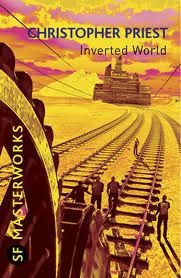 Inverted World was like and yet unlike the science fiction I loved. It’s the story of a city built on rails being chased by an anomaly. Every day the people of the city have to remove the tracks from behind the city and place them in front of the city so they can continue to escape the anomaly that is swallowing the ground behind them for one more day. It’s a great science fictional concept, and from that perspective it fit right in with the kind of intelligent science fiction I liked, the works of Philip K. Dick, Ursula Le Guin and J. G. Ballard. But with Christopher Priest, nothing is ever quite what it seems. By the time the novel had played its various twists and turns on me, it was clear that the book was about something much deeper, much more uncomfortable and disconcerting, than I had thought at first. This is one of the few things you can be sure of in a Chris Priest novel. Already, I felt my definitions of science fiction, of what I enjoyed reading and expected from a book, to be subtly shifting and changing. The old dream of writing science fiction, or perhaps writing about science fiction, flared up within me – here was a literature that deserved to be taken seriously, that demanded to be grappled with. I don’t think it’s an understatement to say that Inverted World changed my life.
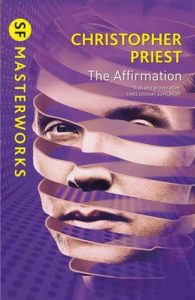
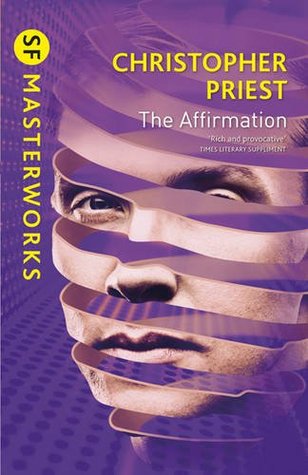
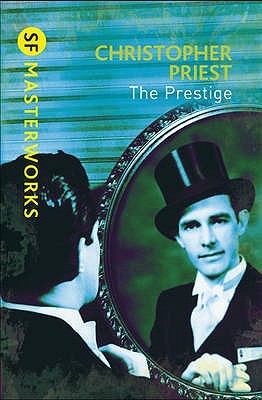
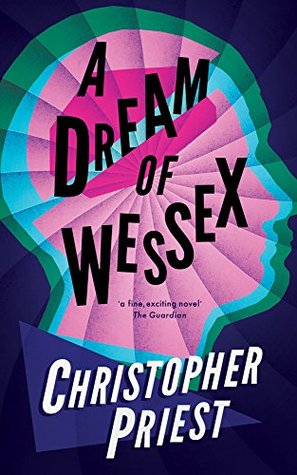
Priest quickly became a favourite writer, one of those authors whose books I would immediately buy when I saw his name on the cover. The Affirmation (1981), the first of his many Dream Archipelago books, in which a confused and somewhat directionless protagonist attempts to make sense of his life through fantasy and metaphor, creating an Escher-esque loop in which both versions of himself are always creating each other, neither more real or fictional than the other, was another early read that blew my mind. So was The Prestige (1995), a complex tale of stage magicians’ jealous feud, whose nuances of British class conflict, memory and metafictional techniques are almost entirely missing from Christopher Nolan’s famous film adaptation, and The Glamour (1984), a book about an unseen underclass of people who share the same world as us despite us looking right through them. Fugue For A Darkening Island (1972) is an absolutely terrifying take on the SF catastrophe novel, in which Priest vividly imagines a near-future Britain torn apart by racism and fear of immigration. It was a novel I found myself returning to in the aftermath of Brexit. My favourite of these early works is perhaps A Dream Of Wessex (1977), in which attempts to imagine a utopian future Britain are corrupted by a man’s truly toxic personality.
 It was around this time that I became aware of Priest’s online presence. Though he had a reputation as a curmudgeon – and certainly no one could eviscerate a text with Priest’s passion and fire – this always came from a place of deep love and respect for science fiction. Priest saw science fiction as a literary form that could and should aspire to be the very best it could be, and his anger was always the result of frustration with a text for it failing to achieve this. And indeed, he was as passionate celebrating the books he loved. As a critic, Priest was exacting, but always engaged deeply with a text, and loved celebrating books he enjoyed. It was through Priest’s writing that I was introduced to Anna Kavan’s post-apocalyptic masterpiece Ice (1967) and Lavie Tidhar’s modern alternate history Osama (2011), both who have since become favourite writers of mine also. Priest read widely in and out of genre, and his knowledge and passion for the written word was always inspiring.
I first met Priest in 2013, for the launch of his then-current novel The Adjacent. Given both his reputation and the fact that he was basically my literary hero, I was a bit nervous of meeting him, but he couldn’t have been lovelier or more friendly. This is the Priest that I remember from my own interactions with him – a generous, welcoming man who loved talking with people about books and was always encouraging to fans. As I got to know more genre fiction writers, I realized that this encouragement extended to many young writers who Priest seemed to take under his wing. Through Priest I also met his long-term partner Nina Allan, who is also another one of my favourite authors. I had the pleasure of meeting Priest a number of times, and even interviewing him for The Fantasy Hive, one of my favourite author interviews I’ve ever done. He also took an interest in the reviews I’d written of his work, and always remembered myself and my partner each time I saw him. Honestly one of the big incentives for me pursuing my career in reviewing was seeing ARCs of The Gradual (2016) at the first ever Eastercon I attended, and realizing that some lucky people got to read the new Chris Priest before everybody else.
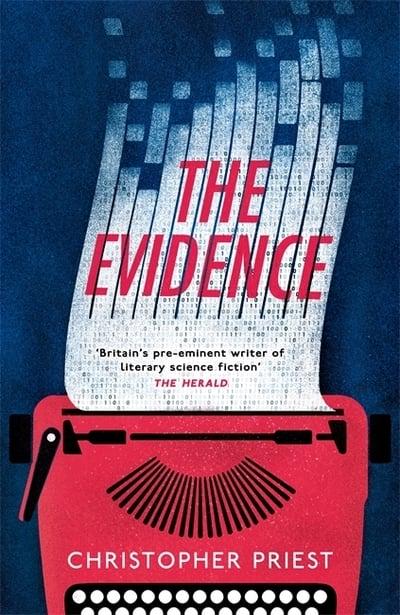
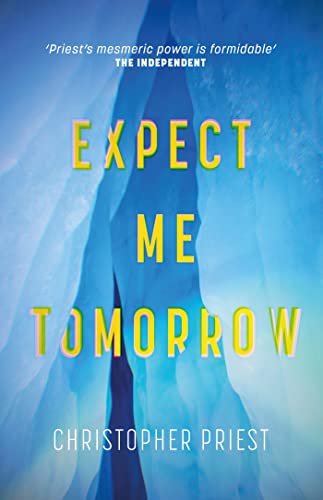
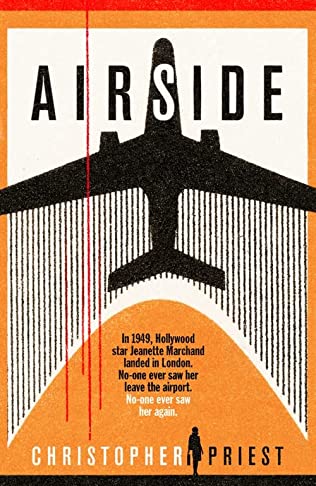
Priest was one of those rare writers whose quality remained remarkably consistent throughout his career. From 2011’s The Islanders, he entered into a new productive late period of his writing, producing incredible works that rival the invention and spark of his early work but bring a powerful maturity and wisdom. The Gradual (2016), The Evidence (2020) and Expect Me Tomorrow (2022) are as good as anything he’s ever done, powerful and questioning works that interrogate the nature of the consensus reality we inhabit as brilliantly as any of his earlier classics. His final novel Airside, released only last year, similarly shows no signs of slowing down, demonstrating a writer very much still at the peak of his imaginative and inquisitive powers. I knew from conversations with Nina Allan that Priest was unwell, but his passing still came as a shock, for his fierce intellect always made him seem so alive. The world of literature has lost one of its most distinctive modern voices, and though I only met him a handful of times, his work so profoundly shaped me that I feel like I have lost both a mentor and a friend. My thoughts are with Nina, Chris’s children and the rest of his family at their time of loss.
And as for us as readers, we are blessed with the incredible body of work that Priest has left us. It’s one of the most exciting and disconcerting bodies of work in modern literature, regardless of genre, and I urge anyone who hasn’t read any of his work to take the plunge. I have joked before that, in much the same way that we use Kafka-esque, Dick-ian and Ballardian as adjectives to describe our current bizarre and conflicting reality, in the future people will be using “Priest-ian” in the same way. Because Priest was a writer who uniquely understood and chronicled our bizarre postmodern ever-shifting realities. I am forever grateful to him for the inspiration his work has given me, and for the toolkit he has provided for me for understanding the world around us even as consensus reality crumbles.

Hello.
Just wanted to thank you for your personal view of Christopher Priest’s works. I’m a big admirer of his books and though I’m older than you are (and French!), I also rediscovered them some time ago after having read only a couple in my youth (I’d never forgotten Inverted World).
The Dream Archipelago books are always among my recommendations when people ask me about SF books they could enjoy.
I’ll miss reading new Christopher Priest books.