The Science Behind Conflicts in Literature (GUEST POST by Rachel Cooper)
The Science Behind Conflicts in Literature
5 Difference Types with Examples
 Fiction thrives on conflict. Without conflict, a story has no drive or energy to pull the reader from one page to the next.
Everyone likes seeing well-developed, interesting characters, and an intriguing, unique setting, but we all yearn for a good story. Therefore, the round characters must go through a series of increasing conflicts within the setting, being tested to the utmost to save themselves, the planet, the entire universe.
But how do you come up with a compelling conflict? If bad things keep happening, just popping up out of nowhere, and walloping your main character, there’s a danger of the story falling into a repetitive pattern: ‘and then this happened and then this happened and then this happened…’
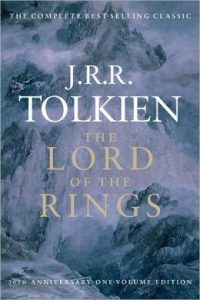
Instead of coming up with obstacle after obstacle, try to think of one overall conflict that can sustain your character across the entire novel. This may be destroying the One Ring, vanquishing Voldemort, or bringing down Big Brother.
To come up with solid, unilateral conflicts to propel your story forward, it helps to unpack and investigate the true source, or science, behind the conflict. First of all, ask yourself who or what your character is up against.
Are they battling the elements like The Martian? Or maybe they’re running for their lives from sentient machines like in I, Robot. Maybe you want your character to have an intense inward journey, a sort of long dark night of the soul like The Strange Case of Dr Jekyll and Mr Hyde. Whatever story you want to tell, it always helps to identify and clarify its central conflict.
1. Human vs. Human
 “Neither can live while the other survives.” J.K. Rowling, Harry Potter and the Order of Phoenix
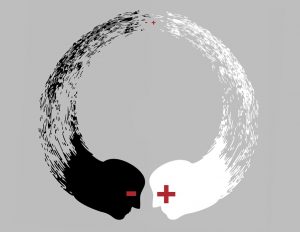
The first, and by far the most common type of conflict, particularly in sci-fi and fantasy books, is the Human vs. Human story. This is where two (or more) characters are pitted against each other. It’s very much external conflict.
Many classic Human vs. Human stories take the guise of Good vs. Evil. Think Star Wars, Lord of the Rings, Harry Potter. Sometimes, writers pit their characters in a conflict of desires. These are often romances or family-based stories.
The other side of Human vs. Human conflict is Human vs. Self. Think Fight Club (spoiler alert), or The Call of the Wild. Sometimes Human vs. Self is classed as its own conflict, and it often centers around interior conflict. However, I’ve kept it in Human vs. Human because it often manifests as two distinct characters, even if they’re in one character’s head.
2. Human vs. Humans
“If you want a picture of the future, imagine a boot stamping on a human face – forever.” George Orwell, 1984
When a character is pitted against a system, it’s called a Human vs. Humans, or Human against Society. Think 1984, V for Vendetta, or The Trial by Franz Kafka. A Human vs. Humans conflict is where a character comes face to face with an institution, system, or group.
Human vs. Humans stories often focus on moral decisions as the individual stands up against the group. It’s also a favorite conflict for fantasy and sci-fi stories, particularly dystopias. Great Human vs. Humans conflicts include The Handmaid’s Tale and Fahrenheit 451.

3. Human vs. Nature
“How do you expect to communicate with the ocean, when you can’e even understand one another?” Stanislaw Lem, Solaris
Human vs. Nature is where the character’s main conflict is against an animal or force of nature. Human vs. Nature is a common adventure story, and there are plenty of classics in the genre like Moby Dick, The Old Man and the Sea, and Stanislaw Lem’s Solaris.
4. Human vs. Technology
“Open the pod bay door, Hal.” Arthur C. Clarke, 2001, A Space Odyssey
One of the fastest-growing areas of conflict in fantasy and sci-fi books is Human vs. Technology. With the rise of AI, robots, computers, machines, etc., now it’s more popular than ever to pit characters against technology.
Technology is often personified in another humanoid character, but writers like Arthur C. Clarke created very imaginative non-corporeal foes for their heroes to face. 2001, A Space Odyssey, Brave New World, and the Terminator franchise are all classic Human vs. Technology stories.
5. Human vs. Fate/Gods/Supernatural
 “Monsters are real. Ghosts are too. They live inside of us, and sometimes, they win.” Stephen King, The Shining
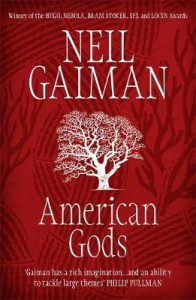
Often underrated, Human vs. Fate conflicts actually own a relatively large niche in the fantasy and sci-fi genres, especially in the horror section. Look no further than the king, Stephen King, to see characters come up against some kind of supernatural being. Neil Gaiman is also a killer Human vs. Gods writer.
Pick your battles
Honing your characters is key. Picking a suitable setting is imperative. Coming up with snappy dialogue is crucial. But it’s arguable that choosing the right conflict is the make or break moment for your novel.
Choose wrong and your characters wander aimlessly, boring everyone who comes in contact with them. Choose correctly and your conflict will propel you, your characters, and your audience from the first page to the last.
 Rachael Cooper is the SEO & Publishing Manager for Jericho Writers, a writers services company based in the UK and US. Rachael has a Masters in eighteenth-century literature, and specialises in female sociability. In her free time she writes articles on her favourite eighteenth-century authors and, if all else fails, you can generally find her reading and drinking tea!